The Hidden Plastics in Children's Clothing (And Why Most "Organic" Clothes Still Contain Plastic)
In a world where "organic" and "sustainable" are often used as marketing buzzwords, it’s easy to believe that choosing natural fabrics is enough. But here’s the truth: most garments (even the ones labelled 100% cotton) are hiding a dirty secret.
IF YOU'RE DOING THE BIG PLASTIC COUNT THIS WEEK, READ THIS
Every March, thousands of UK households count their plastic waste as part of The Big Plastic Count. It is a brilliant exercise in awareness. But here is something that rarely gets counted: the plastic hidden inside your clothes.
This week, while you are tallying up plastic packaging and bottles, it is worth knowing that a single wash of a synthetic garment can shed hundreds of thousands of microscopic plastic fibres directly into the water supply. Clothing is one of the most overlooked sources of plastic in our homes.
That is exactly why The QT was built the way it was: no hidden plastic, no synthetic shortcuts. Below, we break down what is really inside most children's clothing, and what genuinely plastic-free looks like.
HIDDEN PLASTICS ARE EVERYWHERE
From the outside, a t-shirt might look natural, but the inside story is different. Many manufacturers use polyester sewing threads, plastic-based labels, synthetic trims, and polyester interfacings even in otherwise natural garments. These hidden components are almost invisible to the customer, yet they pose a very real threat to our environment.
Most people assume that choosing natural fabric means choosing plastic-free clothing, but the truth is, synthetic materials often hide in the finer details. Here's where plastics typically sneak in:
- Sewing threads - Usually polyester unless specifically replaced with natural thread.
- Labels - Often synthetic or coated in plastic for durability.
- Buttons - Frequently made from plastic or plastic-coated materials.
- Elastic waistbands - Nearly always contain polyester and elastane.
- Interfacing - The stiffening fabric in collars and cuffs is usually polyester-based.
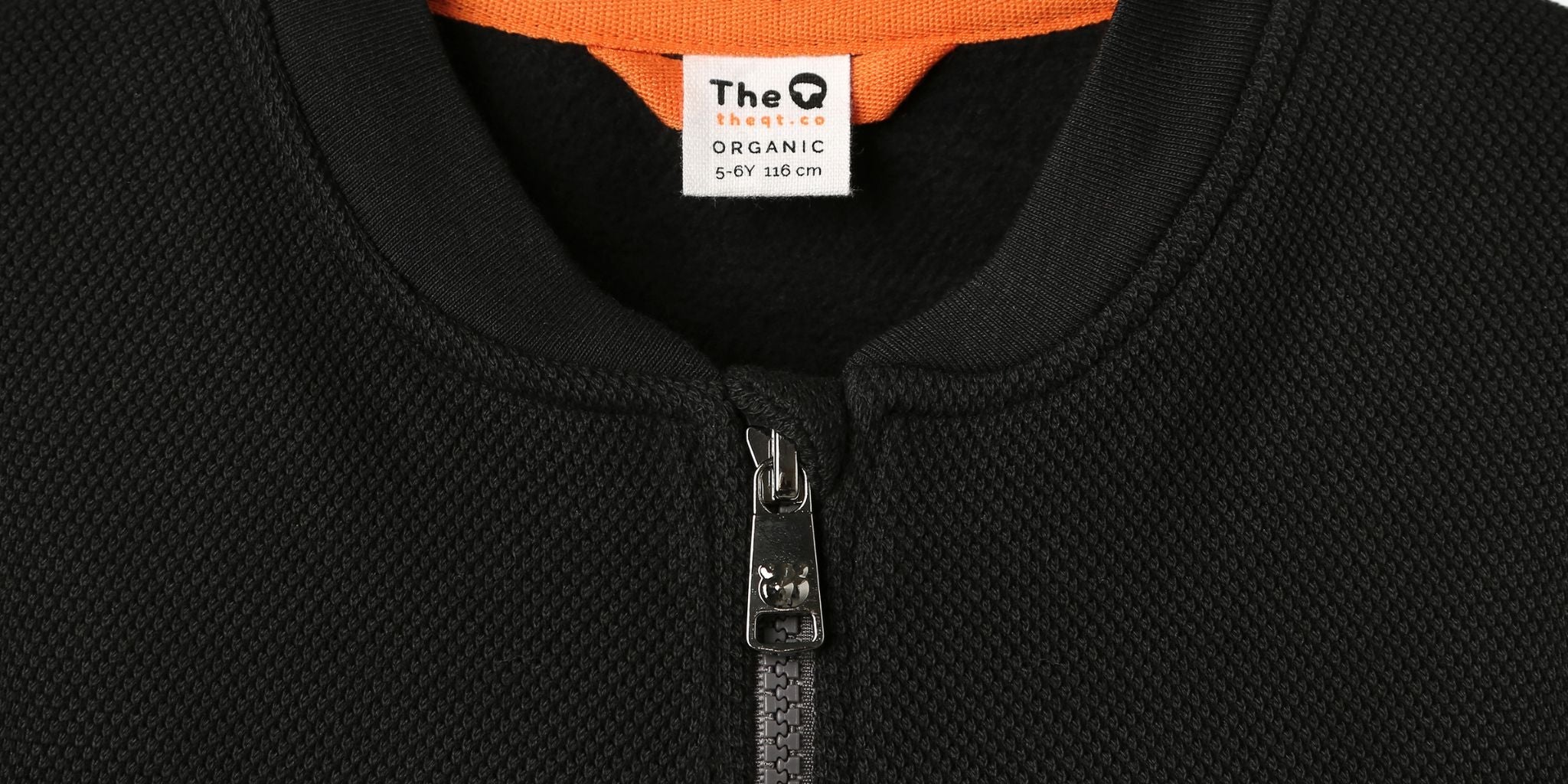
- Zippers - Most zippers use plastic coils and polyester tape, even if the teeth are metal.
- Embellishments - Embroidery, sequins, glitter, and printed graphics are often plastic-derived.
Even 'natural' garments may still contain these elements unless the brand goes the extra mile to eliminate them.
At The QT, we’ve examined every detail to ensure we’re creating garments that are as natural, recyclable, and biodegradable as possible.
MICROPLASTICS: A MASSIVE, INVISIBLE PROBLEM
When synthetic materials are washed, they shed microplastics — tiny plastic fibres that are now found in oceans, rivers, soil, animals, and even in our bodies. It’s estimated that 35% of all microplastic pollution in the ocean comes from textiles. Each load of laundry can release hundreds of thousands of microfibres, which are too small to be filtered out by water treatment systems.
These fibres don’t just disappear. They accumulate in the environment, harming marine life and entering the food chain. They’ve been found in everything from sea salt to drinking water to human placentas.
WHY PLASTIC-FREE CLOTHING IS SO RARE
At The QT, we’re often asked: Why aren’t more brands doing what you do?
The answer is simple and frustrating: plastic-free production is hard.
When we insisted on using 100% cotton sewing threads, our manufacturer warned us:
-
They’re 12x more expensive than polyester.
-
They’re harder to source and must be made to order.
-
They’re less durable for machines, may tear more easily and cause production delays.
In fact, we had to make a significant investment to access natural threads at all - because nobody else was asking for them.
We understand why. Natural threads aren’t mainstream. Suppliers push back. Margins shrink. But we believe that choosing the right thing should matter more than choosing the easy thing.
FASHION'S ROLE IN OCEAN POLLUTION
The fashion industry is one of the largest sources of microplastic pollution in the oceans. Every time synthetic garments are produced, worn, and washed, they contribute to the growing crisis of plastic in marine ecosystems. Coral reefs are smothered. Plankton ingest fibres. Fish, whales, and seabirds are found with plastic-filled stomachs.
It’s not just an ocean problem. Microplastics have been found in soil, tap water, breast milk, and even the air we breathe.
THE QT’S COMMITMENT TO TRANSPARENCY & TRUE SUSTAINABILITY
At The QT, we’ve built our entire brand around the idea of cutting through greenwashing and doing the hard things that others won’t:
- Hidden plastics removed wherever we can in our clothing: from threads to tags to buttons
- 100% organic cotton that's gentle on sensitive skin and kind to the Earth
- Designed for circularity so our clothes can be reused, rehomed, and returned to the Earth without harm.
We aren’t perfect but we’re proud to go further than most.
WHAT CAN YOU DO?
Small, informed choices make a real difference. Here are four practical things you can do right now.
Check the full label, not just the fabric content.
Most clothing labels list the main fabric only. Look for a separate composition label that covers all components. If threads, trims or fastenings are not listed, that is worth questioning. You can always email a brand to ask.
Ask brands specifically about their threads and trims.
The fabric is usually the least problematic part of the garment. The hidden plastic tends to be in polyester sewing threads, synthetic labels, plastic-coated printed graphics and polyurethane-lined elastics. A brand confident in its plastic-free credentials should be able to tell you what every component is made from.
Use a microplastic-catching laundry bag for synthetic clothes you already own.
Products like the Guppyfriend bag or a Cora Ball can capture a significant proportion of the fibres shed during washing - a practical step while you transition to more natural alternatives over time.
When it is time to replace a garment, pass it on rather than bin it.
Children grow fast. Before a garment reaches the end of its useful life for your child, it almost certainly has more to give. Platforms like thelittleloop connect pre-loved pieces with new families, keeping good-quality clothing in circulation for longer and out of landfill.
FREQUENTLY ASKED QUESTIONS
Is organic cotton clothing really plastic-free?
Not necessarily, and this is one of the most important things conscious parents can know. A garment can be made from certified organic cotton and still contain plastic in its sewing threads, labels, buttons, elastic waistbands or printed finishes. The fabric certification tells you about the fibre itself, not about every component of the finished garment. Truly plastic-free clothing requires a deliberate decision to eliminate synthetic materials at every stage of construction, which is far less common than "organic" labelling suggests.
What are microplastics and why do they matter in clothing?
Microplastics are tiny plastic particles, typically under 5mm in size, that shed from synthetic materials during everyday use and washing. When clothing made from polyester, nylon or acrylic is laundered, it releases hundreds of thousands of fibres per wash cycle. They pass through water treatment systems, enter rivers and oceans, and have now been detected in drinking water, food, soil and human tissue. For parents dressing young children in clothing worn close to the skin, it is a reasonable thing to consider alongside other household plastic use.
How do I know if children's clothing is genuinely plastic-free?
The most reliable approach is to ask the brand directly. Look beyond the fabric description and ask specifically about sewing threads, labels, elastics, zips, buttons and any print finishes. Brands that are genuinely committed to plastic-free construction will be able to answer clearly and transparently. Where plastic is currently unavoidable in certain components, an honest brand will say so rather than making a blanket claim. GOTS certification is a strong indicator of quality standards, though even GOTS allows some synthetic components, so it is worth asking the extra question.
What does GOTS certification actually mean?
GOTS stands for the Global Organic Textile Standard - widely regarded as the most rigorous certification available for organic textiles. It covers the entire supply chain rather than just the raw fibre, including processing, dyeing and finishing, and sets strict environmental and social criteria. To carry the GOTS label, a garment must be made from at least 70% certified organic natural fibres. It is a meaningful certification, though it does not automatically mean a garment is entirely plastic-free. At The QT, organic cotton is the foundation, not the whole story.
Can I wash plastic-free clothes the same way as regular clothes?
Yes, for the most part. Organic cotton garments are straightforward to care for: a cool wash (30 degrees) works best for most everyday pieces. Because they contain no synthetic fibres, you do not need a microplastic-catching laundry bag, which is one of their quiet advantages over conventional fabrics. Washing at lower temperatures and line drying will extend the life of the garment and reduce energy use.
THE QT: WHERE CUTENESS MEETS CONSCIENCE
Our goal has always been to spread joy without harm. And that means taking a stand against the hidden plastics that pollute and poison our oceans, our land, and our lives. When you choose The QT, you’re not just buying clothes. You’re investing in a future that’s softer, safer, and more sustainable for every kind. Every piece in our plastic-free collection is made without hidden synthetics - from fibre to label.
Because cuteness shouldn’t cost the Earth.
Want to learn more about sustainable fashion, circular design, and plastic-free kidswear? Check out our other posts: