Five things five years of making plastic-free kidswear has taught me
This March The QT turned five. I launched The QT on 8 March 2021, which also happened to be International Women's Day, and that felt right, even though I didn't plan it. Five years later, I'm sitting with that coincidence again, feeling grateful and reflective in equal measure.
Here are five things I know now that I absolutely did not know when I started.
1. "Organic" and "plastic-free" are not the same thing
This was the first real turning point for me, and it came as a genuine surprise.
When I began researching materials for The QT, I assumed organic cotton was the answer. Certified, traceable, grown without harmful pesticides. What more could you need?
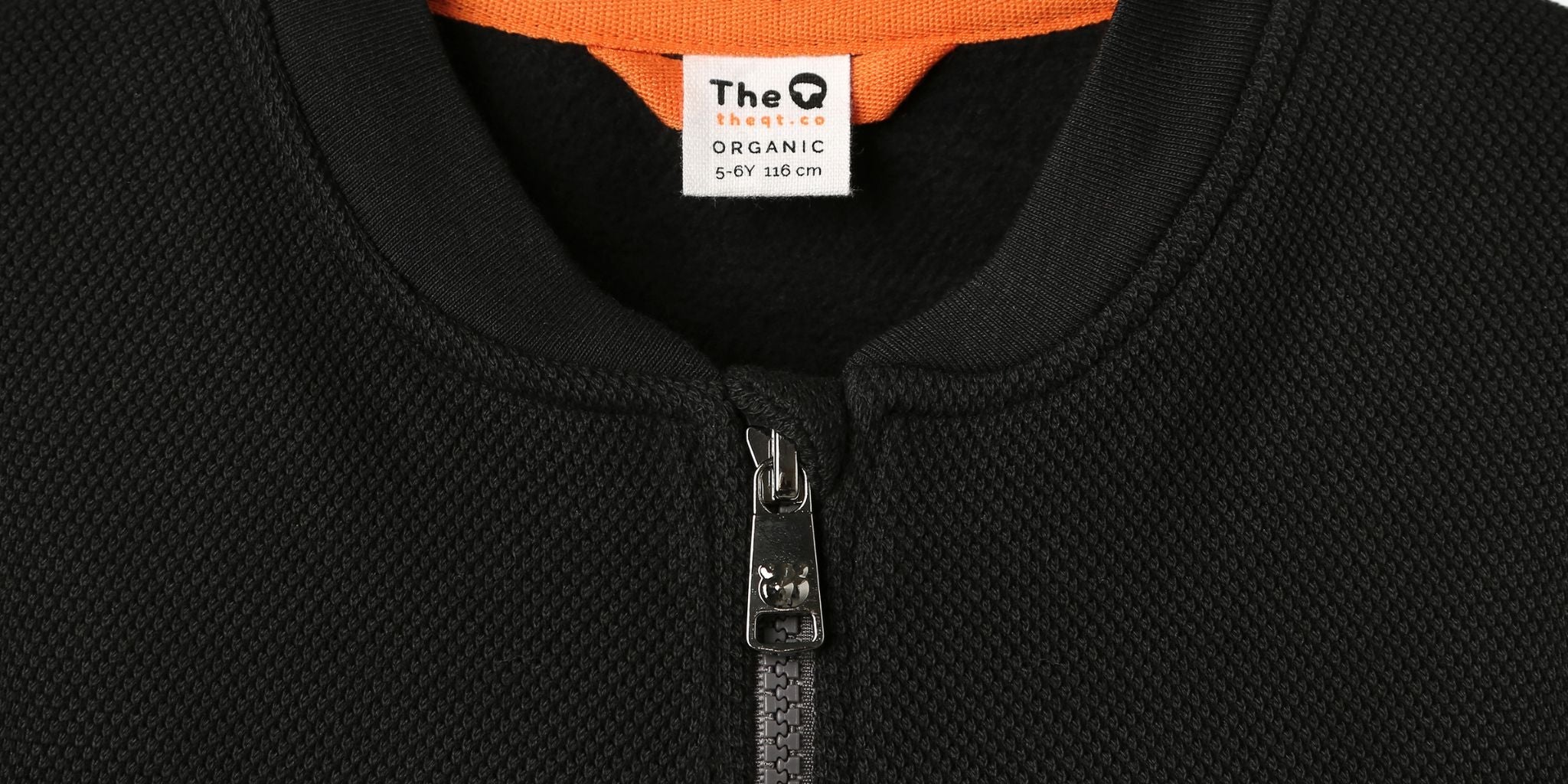
Quite a lot, as it turned out. Because while the fabric itself might be organic, the thread holding the seams together is typically polyester. The label sewn into the back is often woven from synthetic fibres. The buttons are plastic. The screen print uses plastisol inks loaded with PVC and phthalates. So you can buy something labelled "organic" and still be dressing your child in a garment that is substantially made of plastic.
Once I understood that, I couldn't unsee it. It became the founding insight behind everything The QT does, and the reason "wear plants, not plastic" felt like such an honest way to describe what we are actually trying to do.
Most people still don't know this distinction exists. I think about that often.
2. Cute without stereotypes is rarer than it should be
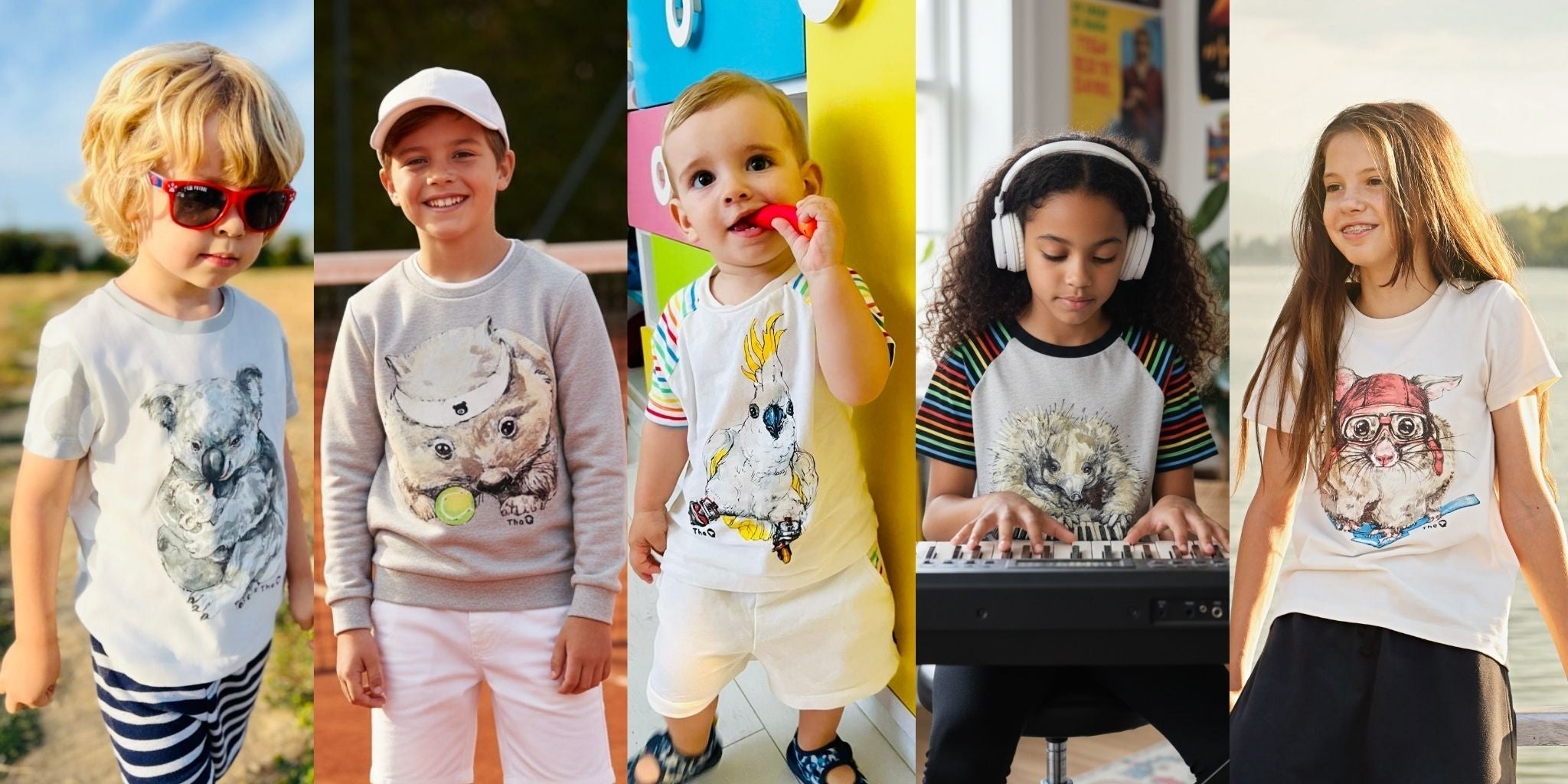
The original impulse behind The QT was personal. After my son grew out of the toddler stage, I found it genuinely difficult to find clothing with playful, joyful animal graphics that felt right for an older child. Almost everything I found was either babyish, heavily gendered, or both.
The "cute" stuff was pastel and infantile. The "older kids" stuff had lost all the joy. And so much of it was aimed at girls, or at boys, rarely at children as a category in their own right.
That gap in the market was also a genuine belief: cuteness shouldn't belong only to babies or to girls. It should belong to everyone. A seven-year-old who loves hedgehogs should be able to wear a hedgehog without it being dressed up in a tutu or plastered across a neon slogan tee.
Designing with that in mind has shaped every single QT print. And it's taught me that when a gap in the market also aligns with something you genuinely believe, that's a worthwhile place to build something.
3. Circularity has to be designed in from the start
You cannot make a garment circular after it's been made. I know that sounds obvious in hindsight, but it took me a while to fully understand the implications.
Circularity isn't a feature you add at the end, like a swing tag or a returns programme. It's a decision you make at the design stage, and then again at every subsequent stage. What materials go in? How are they constructed? Can the garment be repaired? Can it be passed on in good condition? What happens to it at end of life?
If any part of that chain involves a material that can't biodegrade, or a construction that makes repair impossible, the garment is no longer truly circular. So the choice of thread matters. The choice of elastic matters. Whether you use a zip or a button matters.
This changed how I make everything. It also made me appreciate that "made to be remade" is a commitment with real design consequences, not just a nice phrase to put on a website.
4. Being honest about imperfections is a strength, not a weakness
The QT is plastic-free wherever possible. That "wherever possible" is important, and I say it deliberately.
Some plastic in clothing is still genuinely unavoidable with current materials. Certain elastics. Certain zippers. There isn't always a fully viable natural alternative that will hold up to the demands of children's clothing. I made a choice early on to be transparent about this rather than overclaim.
It would have been easy to say "plastic-free" without qualification. Many brands do. But that would have been greenwashing, and greenwashing is something I feel strongly about avoiding - not just because it's dishonest, but because it makes it harder for customers to trust any sustainability claim from any brand.
What I've found is that customers respond to honesty more than they respond to perfection. They know the world is complicated. They appreciate being told the truth rather than being sold an impossible ideal. That trust, built slowly and carefully, matters more to me than a cleaner-sounding headline.
5. Building slowly and intentionally matters more than scaling fast
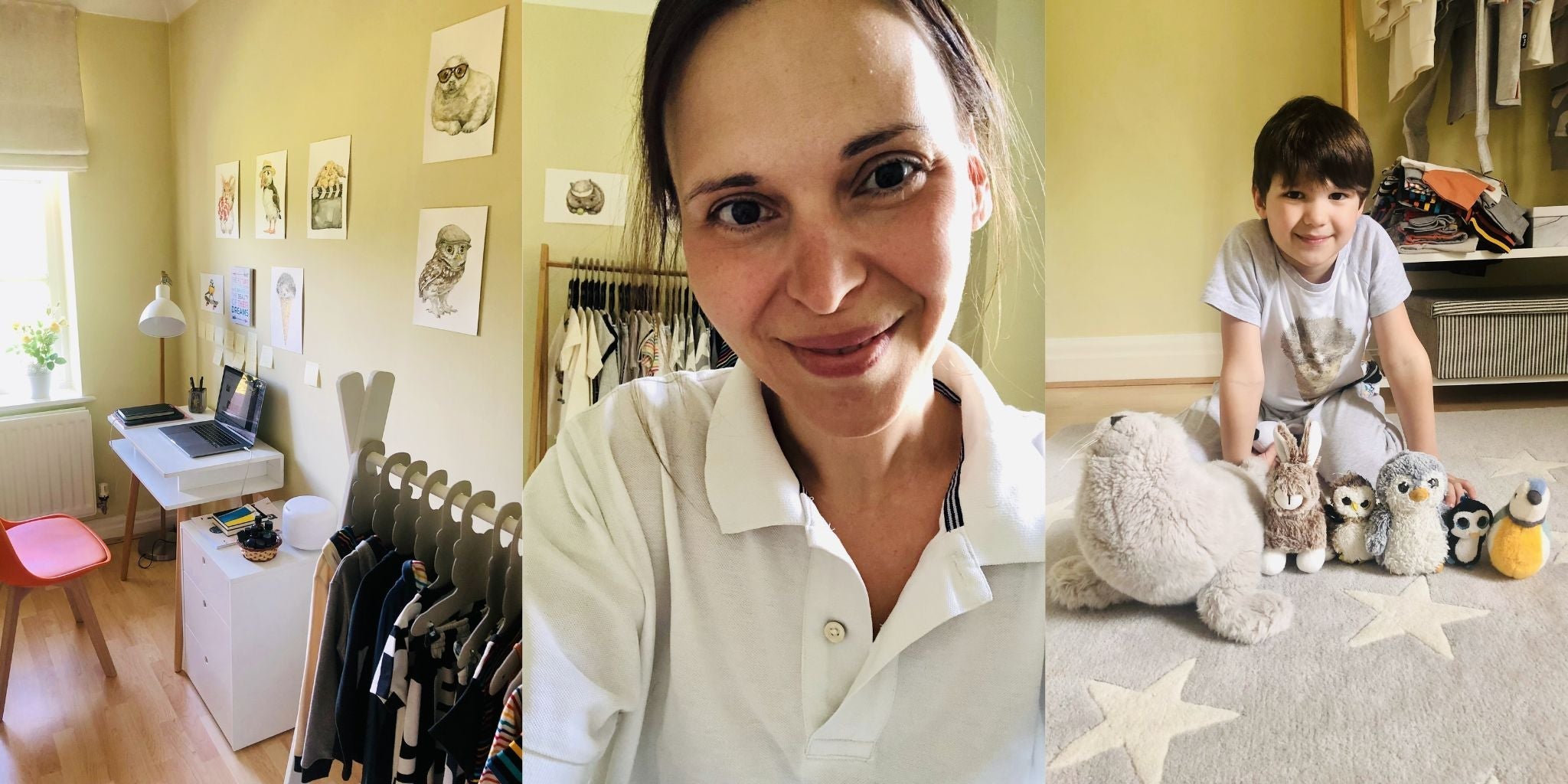
I run The QT alone. Every decision passes through me: the design, the sourcing, the copy, the customer emails, the social media, the strategy. I've invested a lot in building this brand. The stakes are real and they are personal.
In the early days, I sometimes felt that the pace was a problem. That I should be growing faster, reaching more people, doing more. That slowness was a sign of something going wrong.
I don't think that anymore.
Working within real constraints - of budget, of time, of capacity - has made every decision more considered. There is no room for moves that don't make sense. There is no budget for shortcuts that compromise the values. The limitation has, in its own strange way, made the brand better, because nothing gets into it carelessly.
I've come to believe that a brand built with this level of intention is more valuable than one built fast and hollow. That doesn't mean slow is always right. It means that for something like this, where the values are the product, the pace has to match the purpose.
Five years is a long time and no time at all. I'm proud of what The QT has become, and genuinely curious about what comes next.
If you've been part of this journey in any way - as a customer, a follower, someone who has passed a QT garment on to a smaller child - thank you. It means more than you know.
If you’ve enjoyed reading this, the full range is here.
With love,
Petya & The QTs