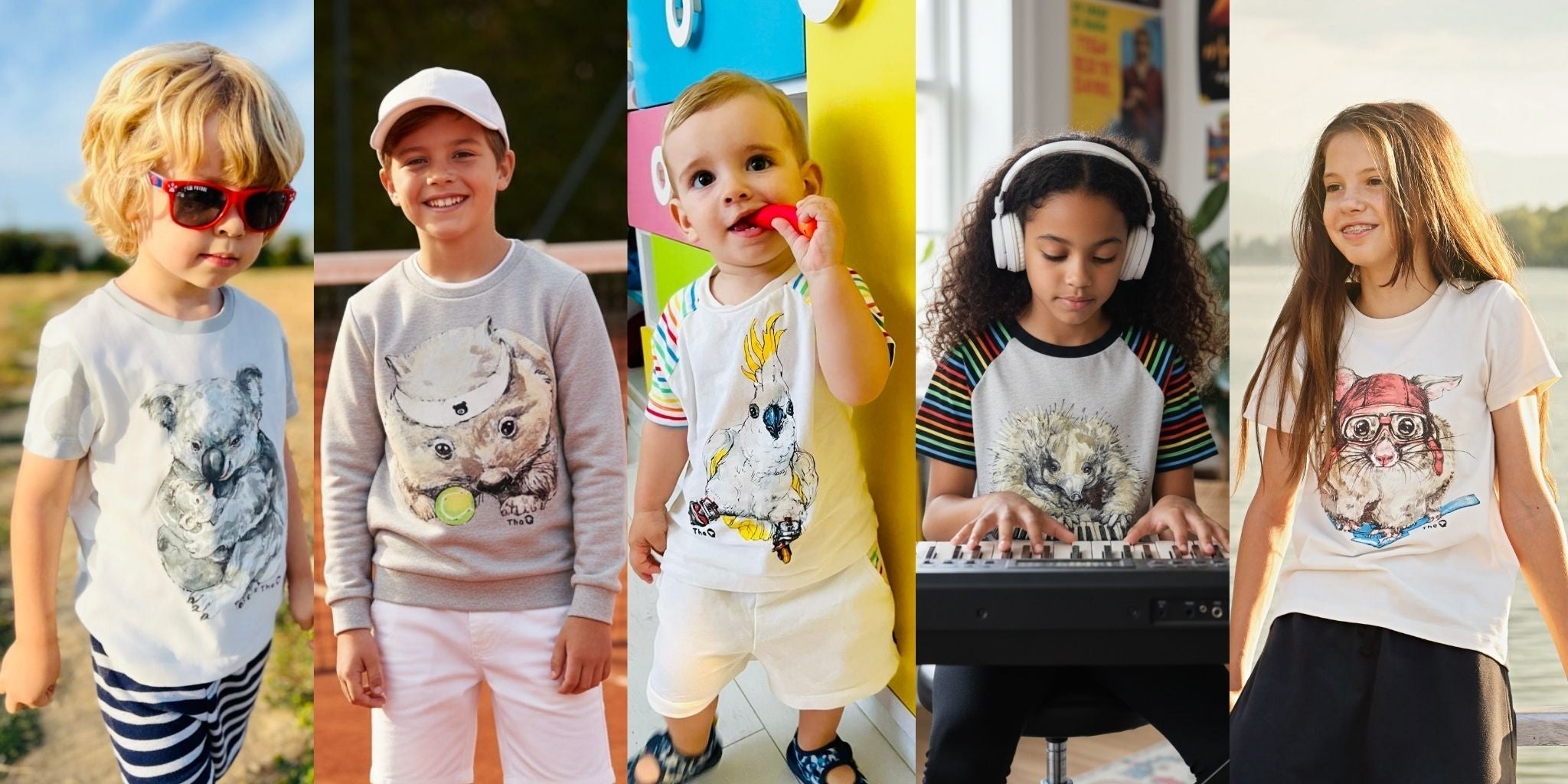
Meet the Cuties of Australia: five animals, one artist, and a range made with love
Every QT range begins with a feeling - that this particular animal deserves to be celebrated. Properly celebrated - not turned into a cartoon, not placed onto a pink dress and called “cute”. Given space. Given detail. Given the kind of attention that makes a child look at their clothing and actually feel something.
The Cuties of Australia collection began that way. Five animals from the other side of the world, each one extraordinary in ways most of us have never stopped to consider. And each one brought to life by Ani Pashova of Apash Illustration, whose hand-painted artwork sits at the heart of every QT print.
Ani doesn’t just illustrate animals. She studies them - their posture, their personality, the small details that make each species unlike any other. Working with her on this collection was, honestly, one of the loveliest parts of making it. Here is a little of what we learned along the way.
THE KOALA CUDDLE
Koalas sleep for up to 22 hours a day.
This is not laziness - eucalyptus leaves are extraordinarily difficult to digest, and a koala’s entire biology is organised around the energy required to process them. They are, in the most literal sense, living slowly on purpose.
They also have unique fingerprints. One of only three animals in the world to do so (alongside humans and chimpanzees). Something about that feels significant. This gentle, unhurried creature leaving its own mark on the world, quietly and distinctly.
The Koala Cuddle print captures exactly that - soft, close, warm. Made for days that don’t need rushing.
THE WOMBAT TENNIS
Wombats are the only animals in the world that produce cube-shaped droppings.
Scientists spent years trying to understand how. The answer lies in unusually elastic intestinal walls that shape the droppings as they form - a solution so precise it has inspired research in manufacturing and packaging.
They can also run at surprising speed when they need to. Which feels like exactly the right energy for a wombat dashing after a tennis ball.
THE SKATING COCKATOO
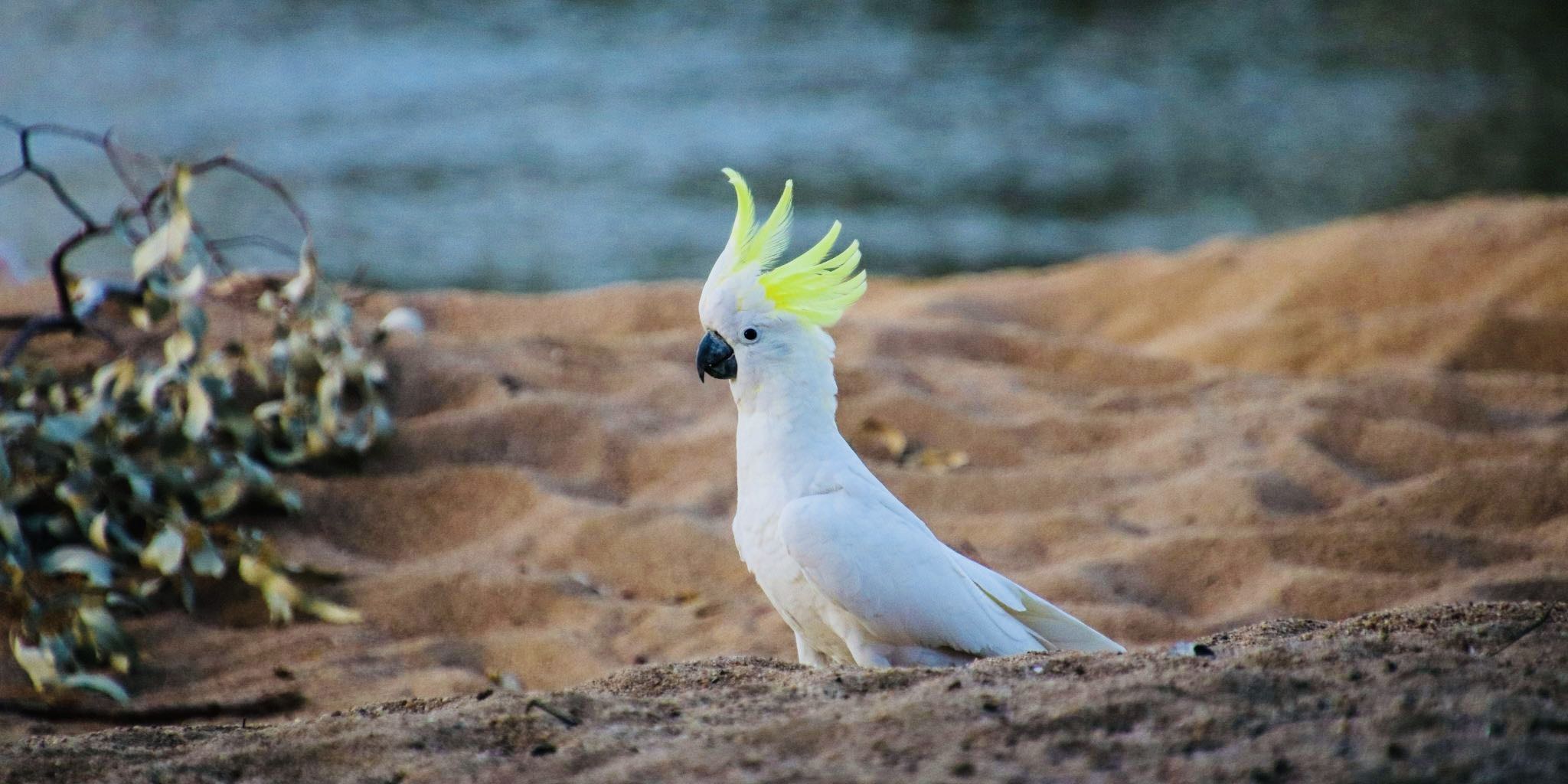
Cockatoos have been observed teaching each other new skills - a behaviour so rare in the animal kingdom that researchers have described it as a form of animal culture. One learns how to open a bin lid; within weeks, others in the flock have learned too - each adapting the technique in their own way. A kind of shared knowledge, passed along and reshaped.
Their crests tell you everything about how they feel. Raised when excited. Flat when calm. Somewhere in between when curious. Once you know this, you cannot look at a cockatoo without reading its mood.
We gave the Skating Cockatoo that same expressive energy - full crest, mid-glide, completely in its element.
THE ECHIDNA PIANIST
Echidnas are one of only five mammals in the world that lay eggs. They have no teeth. They navigate using electroreceptors in their snouts, sensing the tiny electrical fields produced by other living things. They are, in almost every way, unlike anything else on earth.
And yet they are gentle. Slow-moving. Unhurried. They shuffle through the undergrowth with great dignity and absolutely no interest in being hurried along.
The Echidna Pianist felt right for those who do things their own way.
THE GLIDER PILOT
Sugar gliders stretch a thin membrane from wrist to ankle and launch themselves into the night, covering up to 50 metres in a single glide.
They navigate by memory, returning to the same trees night after night. They are fiercely social - communicating through soft calls - and they know, instinctively, when they belong somewhere.
There is something in that worth holding onto.
Every print in the Cuties of Australia collection is hand-painted by Ani and printed with water-based inks on 100% organic cotton.
No hidden plastics. No synthetic fibres woven in unnoticed. Designed for the circular economy - to be worn often, washed gently, and passed on when the time comes.
Made for children who notice things. Who ask questions. Who care about animals. Who find meaning in small details - even if they don’t quite have the words for it yet.